
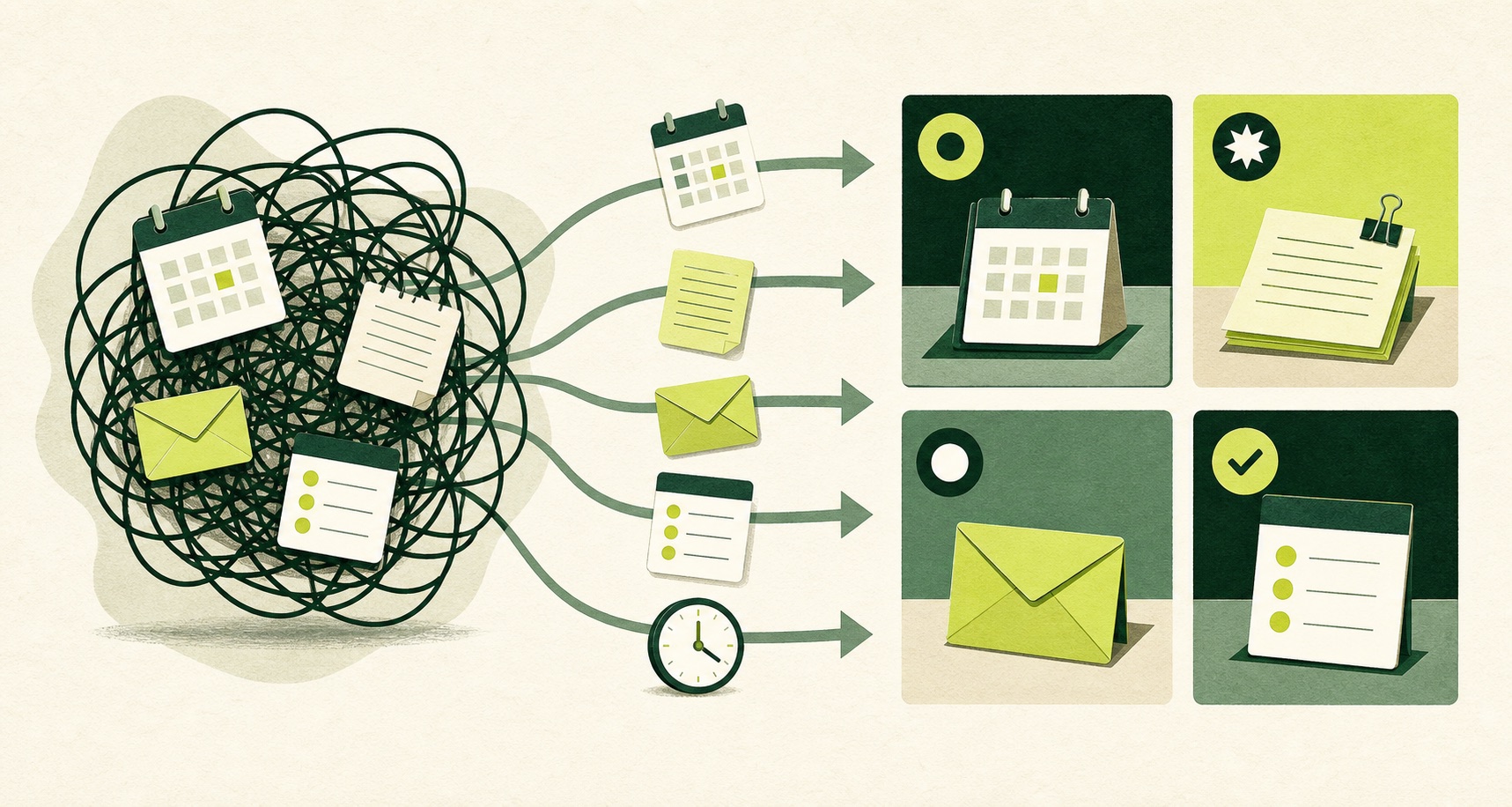
Start with the work, not the label
People with ADHD may experience difficulties with sustained attention, organization, time management, or working memory. The pattern and severity vary, and similar problems can have other causes.
At work, the most useful unit of analysis is a specific failure point: a deadline disappears, the top priority is unclear, a handoff is delayed, or a repetitive check is skipped.

1. Capture deadlines where they will reappear
- Record the due date during the conversation, not afterward.
- Add an earlier “start” reminder, not only a final deadline.
- Put the link or file location inside the reminder.
2. Reduce priority decisions
- Keep one trusted list rather than several half-current lists.
- Choose one must-move item for the day.
- When priorities conflict, ask: “Which should move first if both cannot be finished today?”
3. Use a three-line status template
- Done: what has changed since the last update.
- Next: the next concrete action and expected time.
- Blocked: the decision, access, or information you need.
4. Build checks from your real error history
A generic checklist is easy to ignore. Keep a short list of errors that actually recur—wrong recipient, missing attachment, stale date, transposed number—and run it in the same order before sending.
Accommodations and professional support
Depending on the role and jurisdiction, possible workplace supports may include written instructions, reduced distractions, task-management tools, structured check-ins, or schedule adjustments. Accommodation rules differ by country and situation, so use local official guidance or qualified advice.
Sources and further reading
Sources support the health and diagnostic context. Practical workflow suggestions are low-risk editorial adaptations, not clinical treatment.