
Friction MapPractical systems for ADHD work & life日本語

Home & Admin

Stop planning a big cleanout: build two landing zones

Reduce repeated searching by giving arriving items and frequently lost essentials a visible return path.

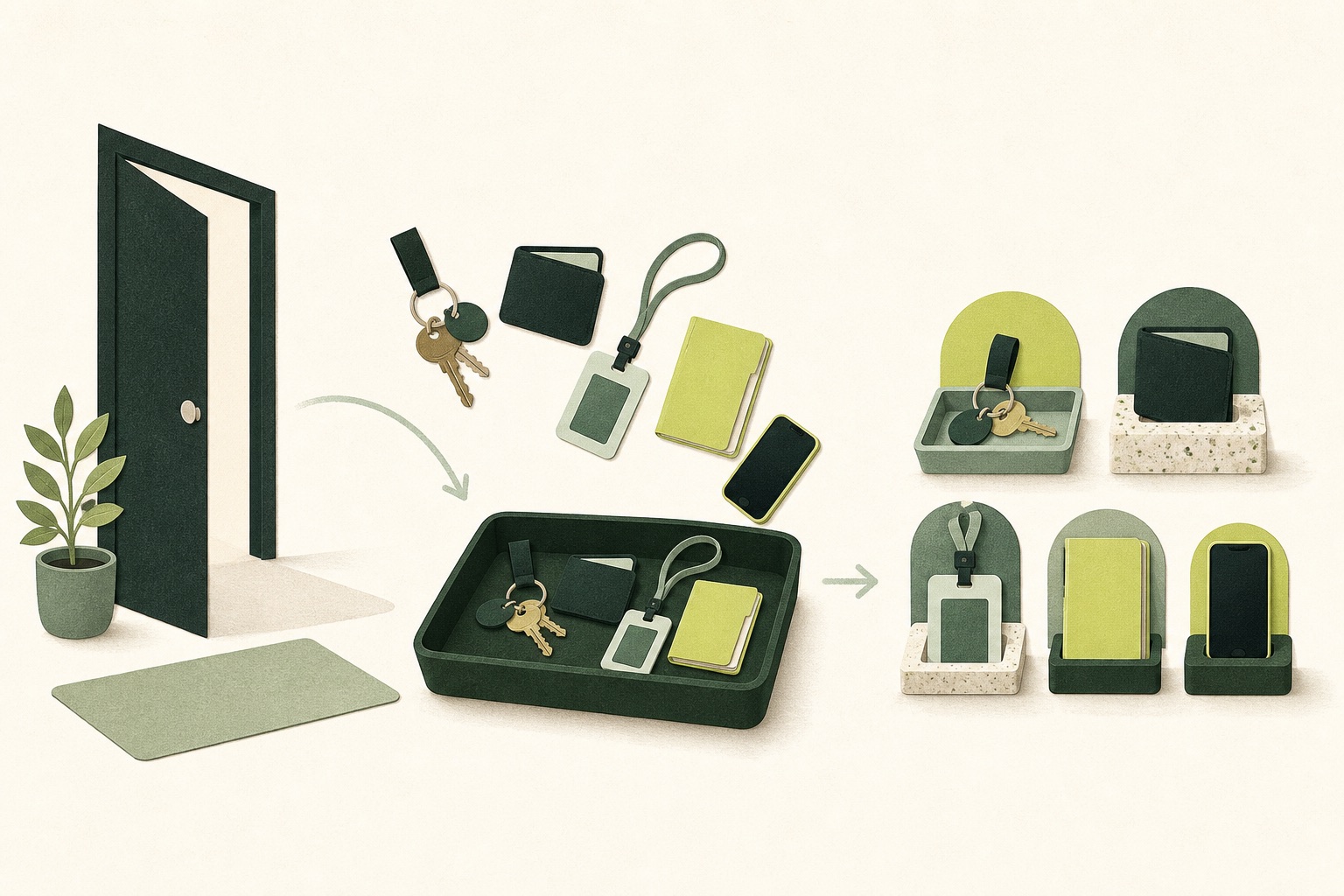
Frequently carried household items move from an entry landing tray to a small set of clearly visible return homes
A landing zone catches what arrives; a return zone makes the next departure easier.
Quick take

See the decision before the details

Watch the real route

Start where the item is naturally dropped instead of reorganizing the whole room.

Give zones different jobs

Use one arrival place and one small permanent return home for repeated essentials.

Test before buying

Remove lids and extra sorting steps, then test the two zones for one week.

Search the route, not the whole house

Losing keys, phones, documents, and daily essentials can be part of broader difficulties with organization and memory, but clutter also reflects space, workload, mobility, other household members, and available storage.

A complete cleanout asks for many decisions. A landing-zone experiment focuses on one repeated route.

Create two different zones

  • Arrival zone: a visible tray or open container where carried items land immediately.
  • Return zone: the smallest permanent home for the items needed again—keys, wallet, badge, medication bag, or outgoing documents.
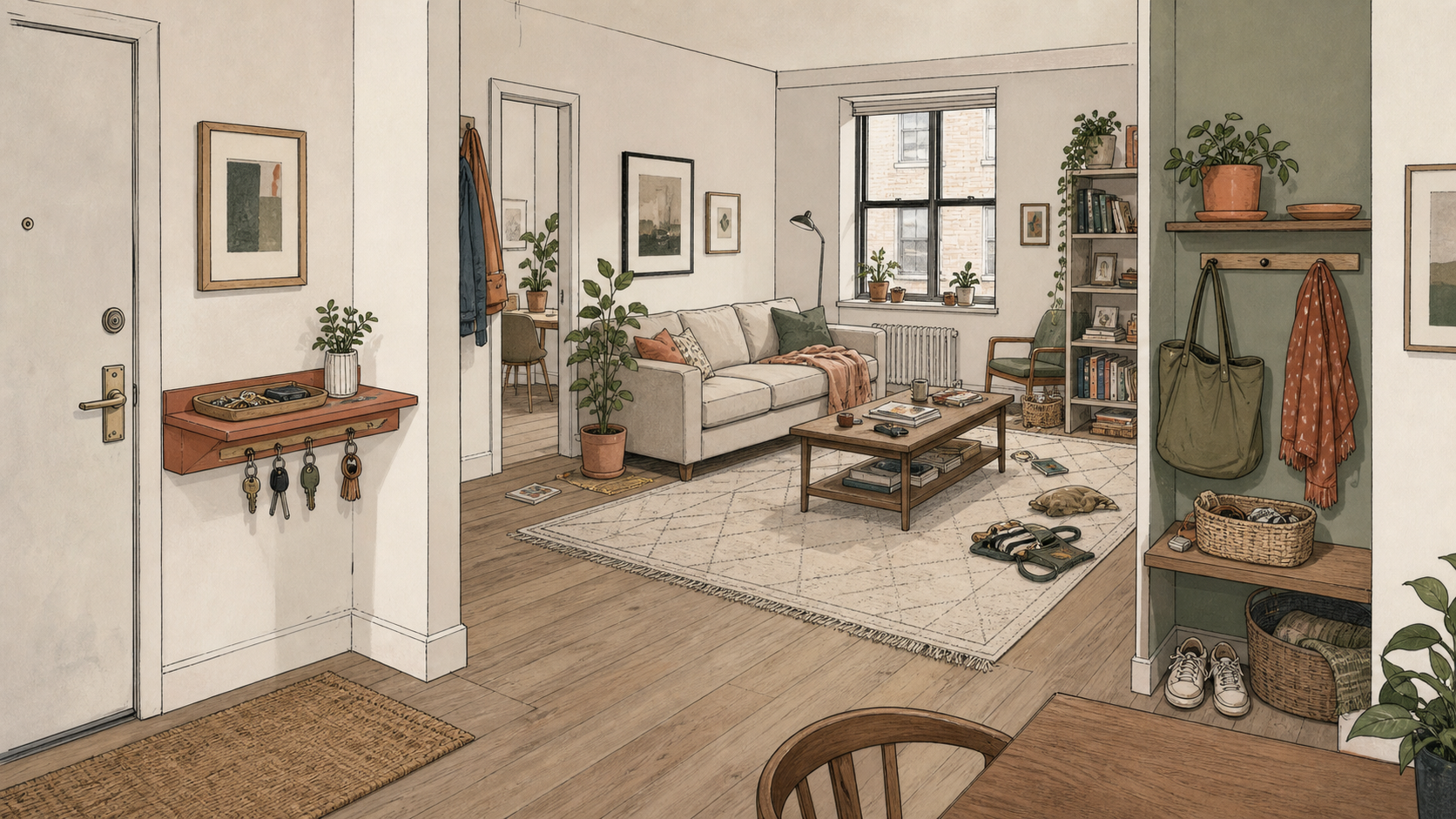
An architectural editorial illustration shows a modest ordinary room with a shallow arrival ledge by the door and a separate everyday-bag niche at the opposite room edge
Two small edge zones support repeated movement without requiring a whole-home transformation or a showroom-perfect center.

Design for the existing path

  1. Watch where the item is naturally dropped now.
  2. Place an open container within one movement of that spot.
  3. Remove a lid, label, or sorting step if it prevents returning the item.
  4. Test for one week before buying more storage.

Keep the zone from becoming a new pile

Limit the zone by physical size and give overflow a scheduled review. During the review, move only items that do not belong to the repeated route; do not turn it into a whole-home cleaning session.

Consider safety and shared space

Keep medication, identity documents, sharp objects, and dangerous products secure when children, visitors, or vulnerable people may access the area. Agree on shared zones with other household members rather than moving their belongings without permission.

Sources and further reading

Sources support the health and diagnostic context. Practical workflow suggestions are low-risk editorial adaptations, not clinical treatment.