
Why a calendar event may not be enough
Adults with ADHD may experience difficulty with time management, planning, organization, remembering tasks, and completing large projects. A calendar can hold the deadline while still hiding the moment work needs to begin.
The goal is not to estimate every minute perfectly. It is to place enough visible anchors that the next transition does not depend on remembering at exactly the right moment.
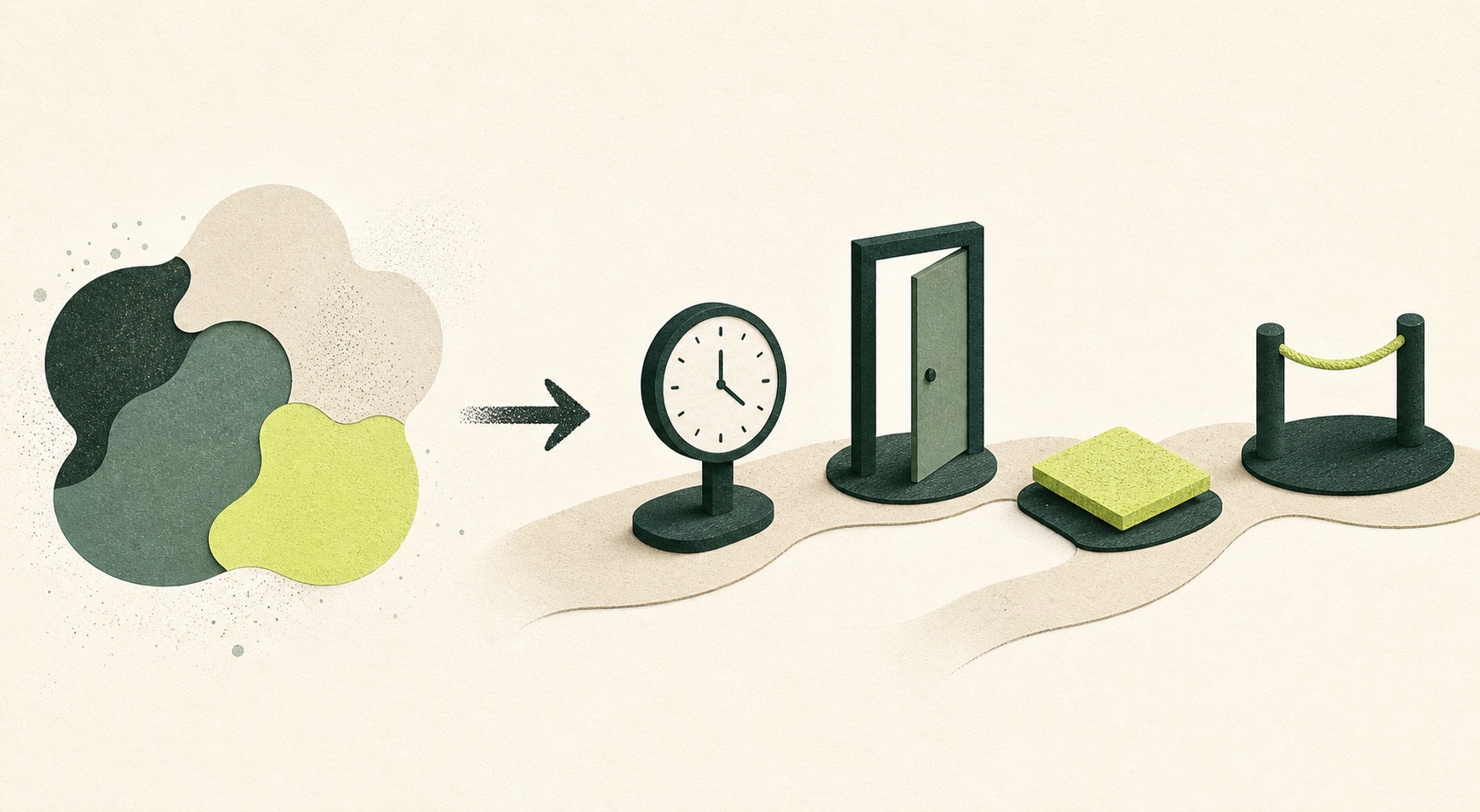
Build four anchors
- Start cue: the alarm, location, or previous event that opens the task.
- First action: the first physical step, such as opening the file or laying out the materials.
- Transition cue: a reminder early enough to save, pack, travel, or switch contexts.
- Stop cue: a defined point for ending, handing off, or choosing a new block.

Treat estimates as data, not promises
- Write your best estimate before starting.
- Record the actual duration without judging it.
- Note one cause of the gap: setup, interruption, uncertainty, waiting, or recovery.
- Use the pattern from several attempts to plan the next block.
Protect transition time
Back-to-back plans assume switching is instant. Add a small buffer for closing one task, locating what you need, travelling, or regulating after a demanding environment. For high-consequence appointments, use an external reminder and a backup rather than relying on one cue.
Know when to get more support
Severe or persistent time-management problems can have several causes. If they affect safety, medication, finances, driving, work, or basic care, discuss the pattern with an appropriate qualified professional.
Sources and further reading
Sources support the health and diagnostic context. Practical workflow suggestions are low-risk editorial adaptations, not clinical treatment.