
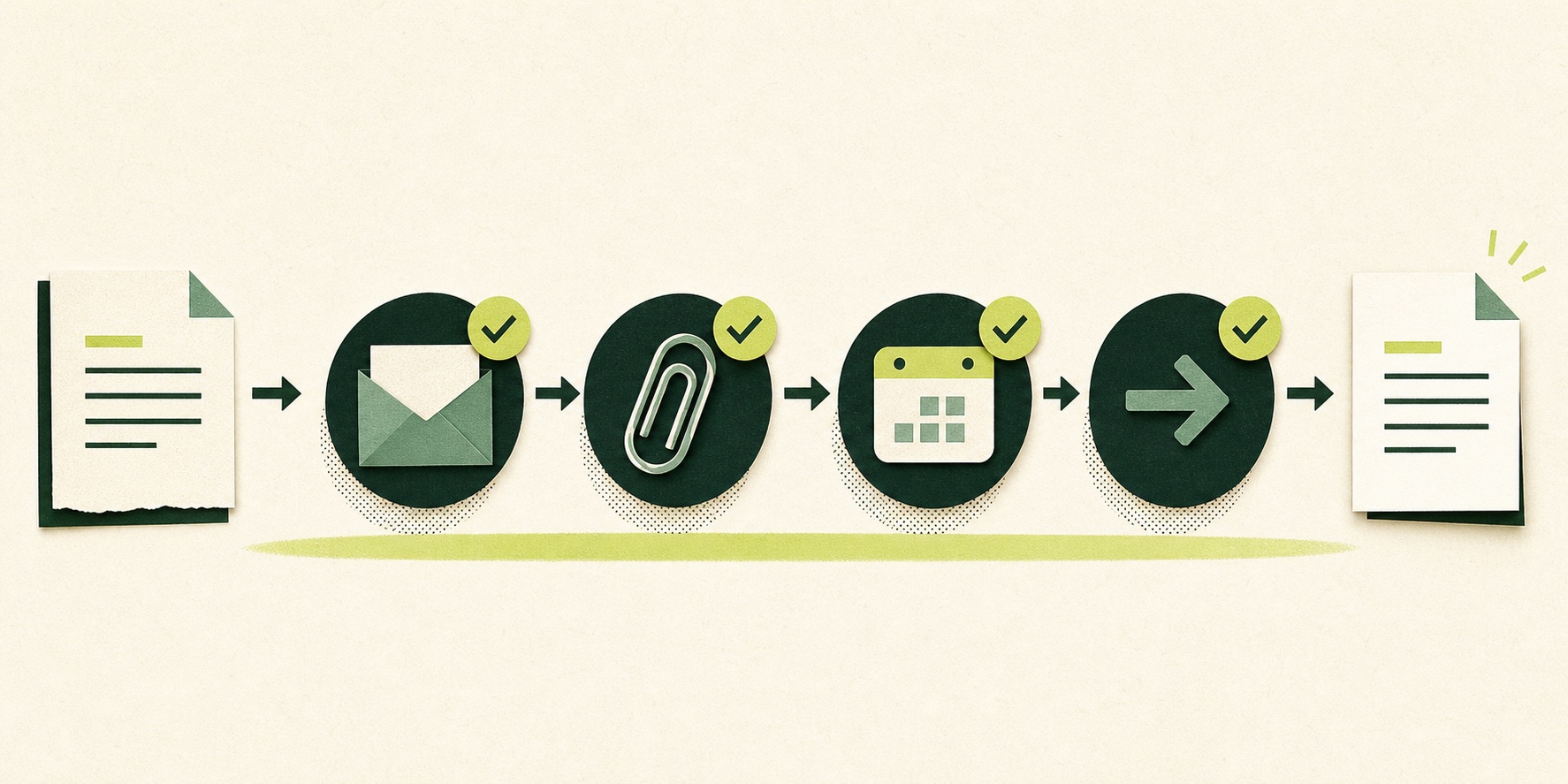
“Be more careful” is not a checking system
ADHD can involve difficulty sustaining attention to details, organizing tasks, and finishing work. Similar mistakes can also happen because of fatigue, unclear processes, excessive workload, or interruptions.
A checklist cannot remove every error. It can, however, make a small set of known risks visible at the exact moment they matter.
Start with your last five errors
- List recent mistakes without judging them: missing attachment, wrong recipient, old date, copied number, incomplete handoff.
- Circle only the errors that have happened more than once.
- Turn each repeated error into a yes-or-no check.
- Keep the final list to roughly three to seven checks.
Split content checks from delivery checks
| Pass | Ask | Compare with |
|---|---|---|
| Content | Is the requested answer present, and are names, dates, and numbers supported? | The authorized request and source evidence |
| Delivery | Are the recipient, current version, attachment, and sharing permission correct? | The approved destination and access settings |
| Handoff | Can the next person see what changed, what happens next, and what is blocked? | The agreed project record and owner |
Write the card so every check can finish
- Start each line with one object: recipient, attachment, date, figure, permission, or owner.
- Name the evidence to compare rather than writing “looks right.”
- Make the answer yes, no, or not applicable; route a no to a defined correction or reviewer.
- Keep the card beside the send or release action, then revise it only when a real pattern changes.
Do not copy client, patient, employee, account, financial, or other confidential details into a personal error list. Keep any required record in the authorized system.
Run the check under better conditions
If possible, separate drafting from checking with a brief pause, change the zoom level, or read critical numbers against the original source. For high-consequence work, use a second-person review or the organization’s formal control process rather than relying on a personal checklist alone.
Workplace context matters
Written instructions, checklists, task-management tools, reduced distractions, and structured feedback are among the supports that may be considered in some workplaces. Accommodation rights and processes differ, so use local official guidance for your situation.
Build one card for the next real send
Choose one ordinary email, report, form, or handoff that you expect to send. Write no more than seven yes-or-no checks from your actual repeated patterns, place the card beside the send action, and run each line once against its source. If a no cannot be corrected safely within your role, stop and route it to the authorized owner or reviewer.
The useful result is not perfect confidence. It is a visible answer to the few questions that most often fail, plus a clear boundary for work that needs a stronger control.
Sources and further reading
Sources support the health and diagnostic context. Practical workflow suggestions are low-risk editorial adaptations, not clinical treatment.