An interruption creates a return task
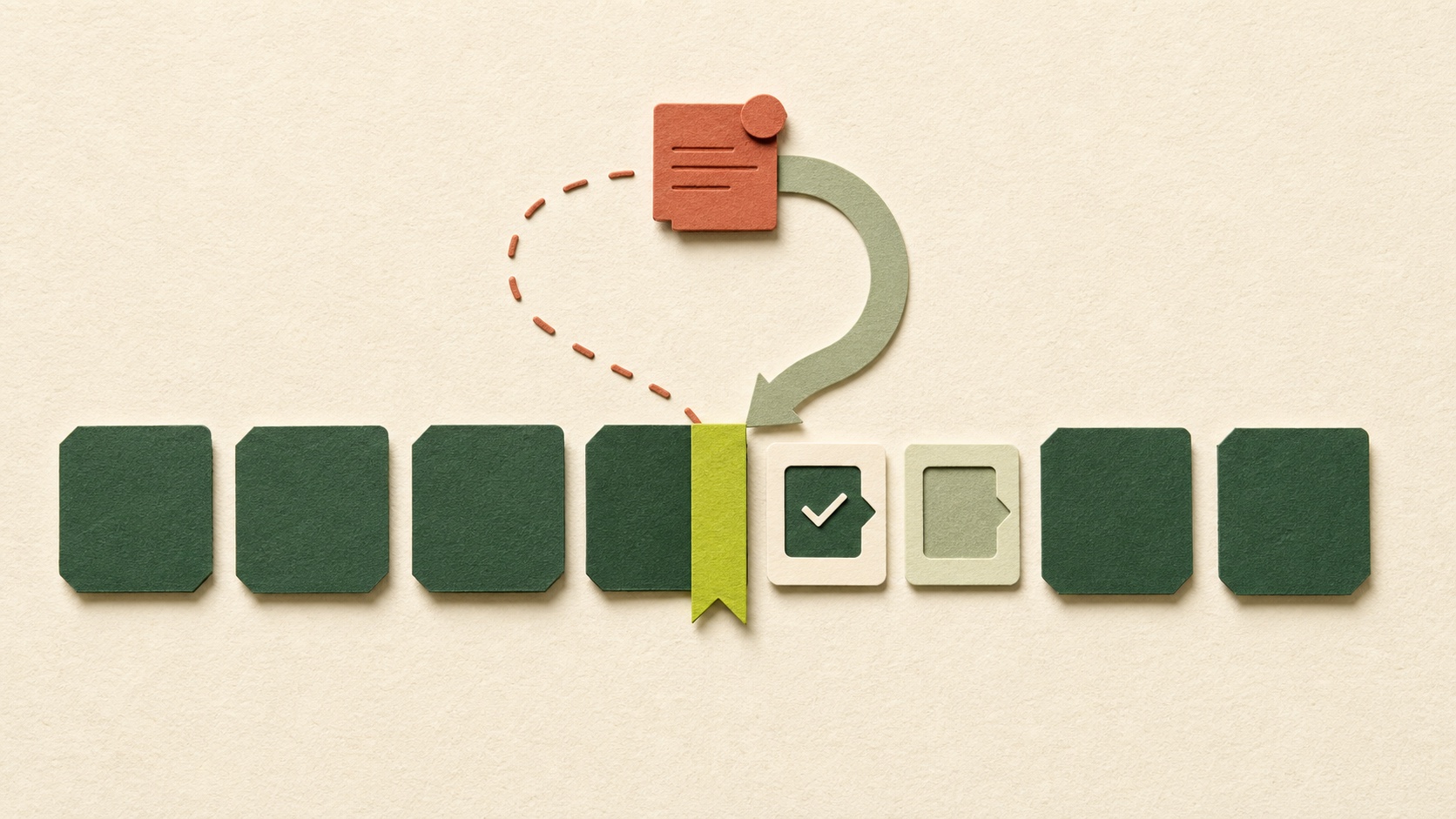
An interruption does not only pause the work in front of you. It creates another task: recover what you were doing, reconstruct the current state, decide what comes next, and regain access to the right materials.
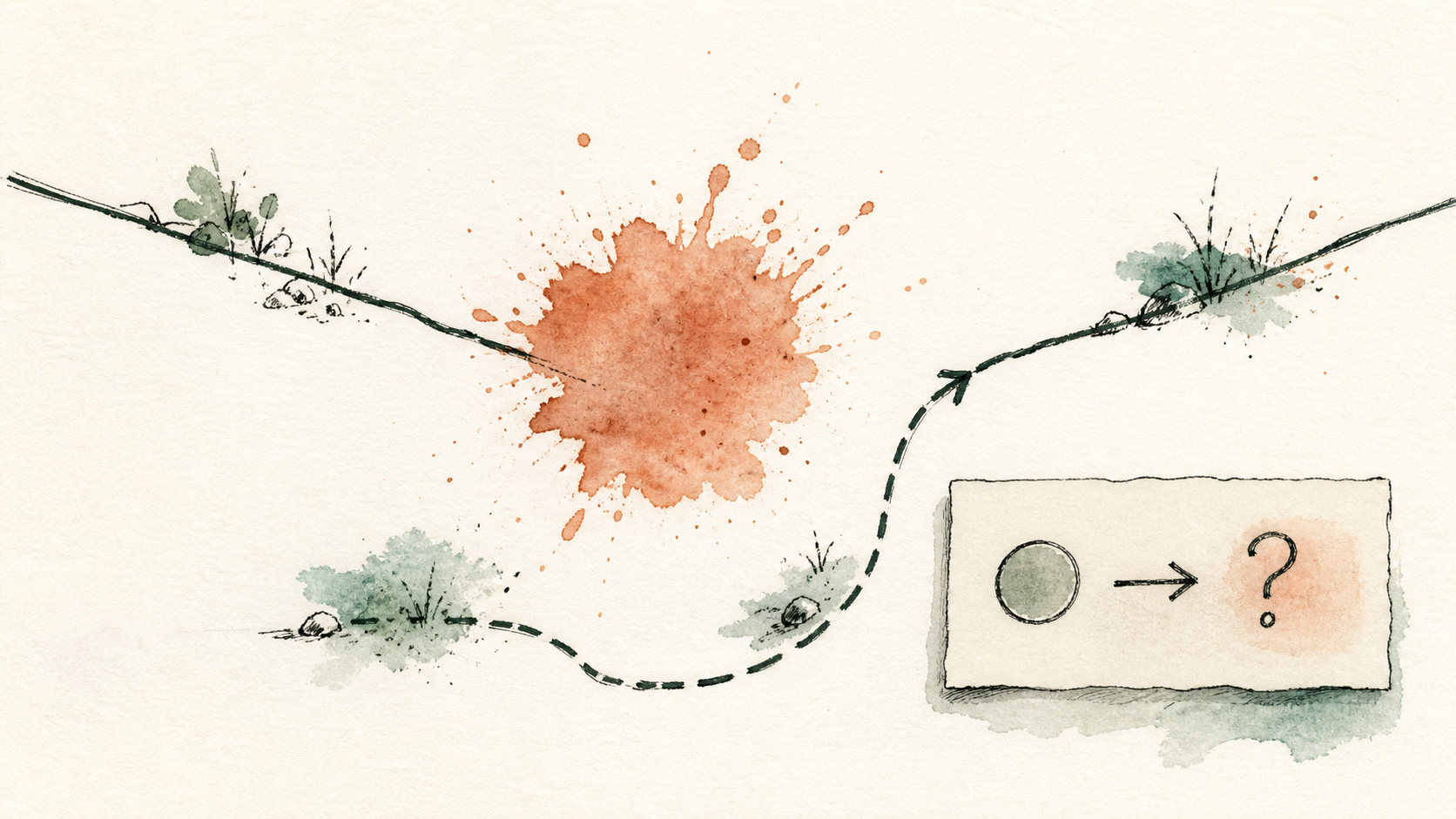
Laboratory studies describe a resumption lag—the extra time needed to return to a primary task after an interruption. Longer or more demanding interruptions can increase that lag. These findings do not mean every difficult return is caused by ADHD, and they do not measure your worth or effort.
Adults with ADHD may experience difficulty staying on task, organizing, remembering daily tasks, or finishing projects. Fatigue, stress, workload, task complexity, and the interruption itself also matter. The practical goal is to make the return require less reconstruction.
Leave two lines before you switch
If the interruption can wait for a few seconds, write a restart note before moving away. Keep it shorter than a status report.
- Last completed: the most recent change you know is saved, sent, checked, or decided.
- Next visible: the first action to take when you return, including the exact file, object, person, or location.
Example: “Last completed: totals checked through the travel section. Next visible: open the receipt folder and compare the hotel amount with row 18.” This is more useful than “continue expenses” because it preserves both state and direction.
Do not add background, every remaining step, or an explanation of the interruption. The note is a bridge, not a second project plan.
Attach the note to the place where you will return
A cue works best when it is encountered at the return point. A detailed note in another system can become a new search problem.
- Put a paper note on the closed laptop or document rather than in a separate notebook you may not reopen.
- Leave the note at the top of the working file, not buried below general project notes.
- For digital work, use one temporary line at the top of the document or one clearly named task comment, if policy allows it.
- If the work contains confidential information, write only the minimum safe cue and follow your organization’s storage rules.
Use a short interruption lag when it is safe
Experimental interruption research has examined the value of a brief pause before switching tasks. That pause can allow the current goal state to be encoded or strengthened for later retrieval. This does not mean every interruption should be delayed: alarms, emergencies, safety issues, urgent care, and required escalation come first.
For an ordinary message or request that can wait 15–30 seconds, use the pause to save the current work and write the two lines. Avoid trying to hold the restart point in memory while also handling the interruption.
If the interruption is a person, a short boundary can help: “Give me twenty seconds to leave my place, then I’m with you.” Use this only when it is appropriate to the relationship and situation.
Return in the same order every time
The two-minute step is not a promise to finish. It tests whether the note successfully restores context. If the note is unclear, improve the next note by naming the exact object and stopping point rather than blaming yourself for losing focus.
- End or contain the interrupting task: close the message, put away the document, or write down what remains there.
- Open the original workspace before reviewing notifications or the whole project plan.
- Read the two-line restart note once.
- Confirm that the recorded state is still current; if another person changed the work, update the note.
- Perform the next visible action for two minutes before deciding whether to continue or reschedule.
When you cannot leave a note first
Some interruptions are immediate. When you return, do not begin by scanning every open tab or rereading the entire document. Start with external evidence of the last stable state.
- Check the last saved version, sent message, completed row, timestamp, or decision log.
- Write one sentence: “The last state I can verify is…”
- Then write: “The next action that does not assume missing information is…”
- If you cannot verify the state, ask the owner or use the formal recovery process before changing high-consequence work.
Protect high-consequence work
A personal restart note is not an adequate control for medication, clinical care, machinery, driving, financial authorization, legal filing, security, or other high-consequence work. Use the organization’s required handoff, checklist, double-check, version control, or incident procedure.
If interruptions are frequent and the work is safety-critical, the system may need protected focus periods, clearer coverage, fewer notification channels, or redesigned handoffs. The solution should not depend only on one person remembering better.
Review the pattern, not one bad return
Track three details for one week: what interrupted you, whether you left a restart note, and how long it took to make the first correct action after returning. The purpose is to identify a repeated failure point, not to measure yourself against an ideal day.
If interruptions and task resumption repeatedly cause significant impairment across work, home, education, or relationships, consider discussing the pattern with a qualified professional. Today, use two lines on one task: last completed, next visible.
Sources and further reading
Sources support the health and diagnostic context. Practical workflow suggestions are low-risk editorial adaptations, not clinical treatment.
- NIMH: ADHD in Adults—4 Things to Know
- NICE guideline NG87: ADHD diagnosis and management
- Monk, Trafton & Boehm-Davis (2008): Interruption duration, demand, and resuming suspended goals
- Morgan, Patrick & Tiley (2013): Improving an interruption lag with a memory-based strategy
- Foroughi et al. (2016): Working-memory capacity and task resumption following interruptions