
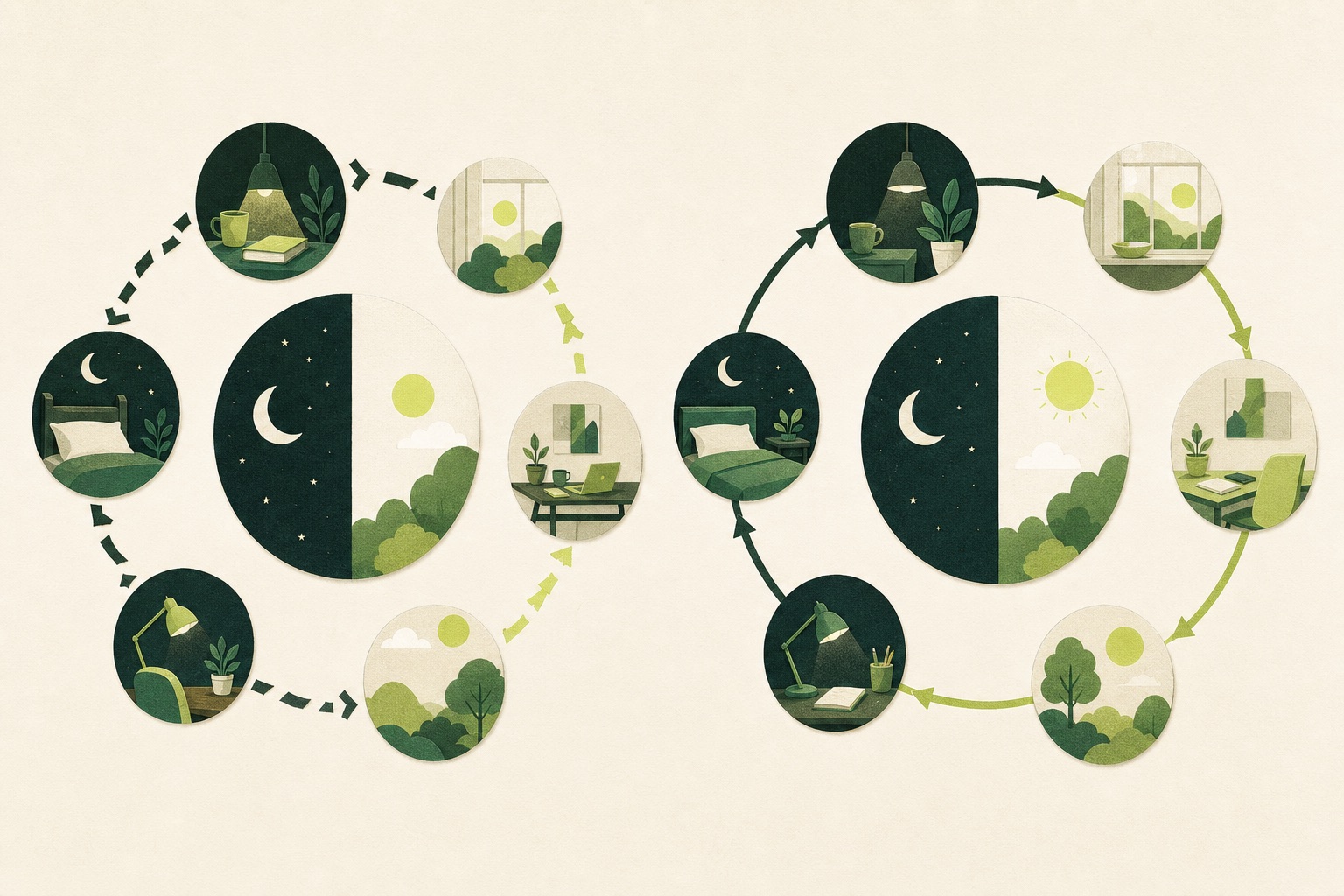
Sleep and attention can overlap
NIMH notes that sleep problems are common among adults with ADHD. Sleep loss and sleep difficulties can also affect concentration, memory, mood, decision-making, and safety in people with or without ADHD.
A tired, unfocused day does not tell you the cause. The useful next step is to describe the pattern without changing medication or diagnosing yourself from an article.
Track seven days of friction
- Approximate sleep and wake times, including weekends.
- Time needed to fall asleep and notable awakenings.
- Morning alertness and daytime sleepiness.
- Caffeine, alcohol, late work, screens, exercise, pain, or shift changes.
- Moments when sleepiness affected driving, work quality, or basic care.
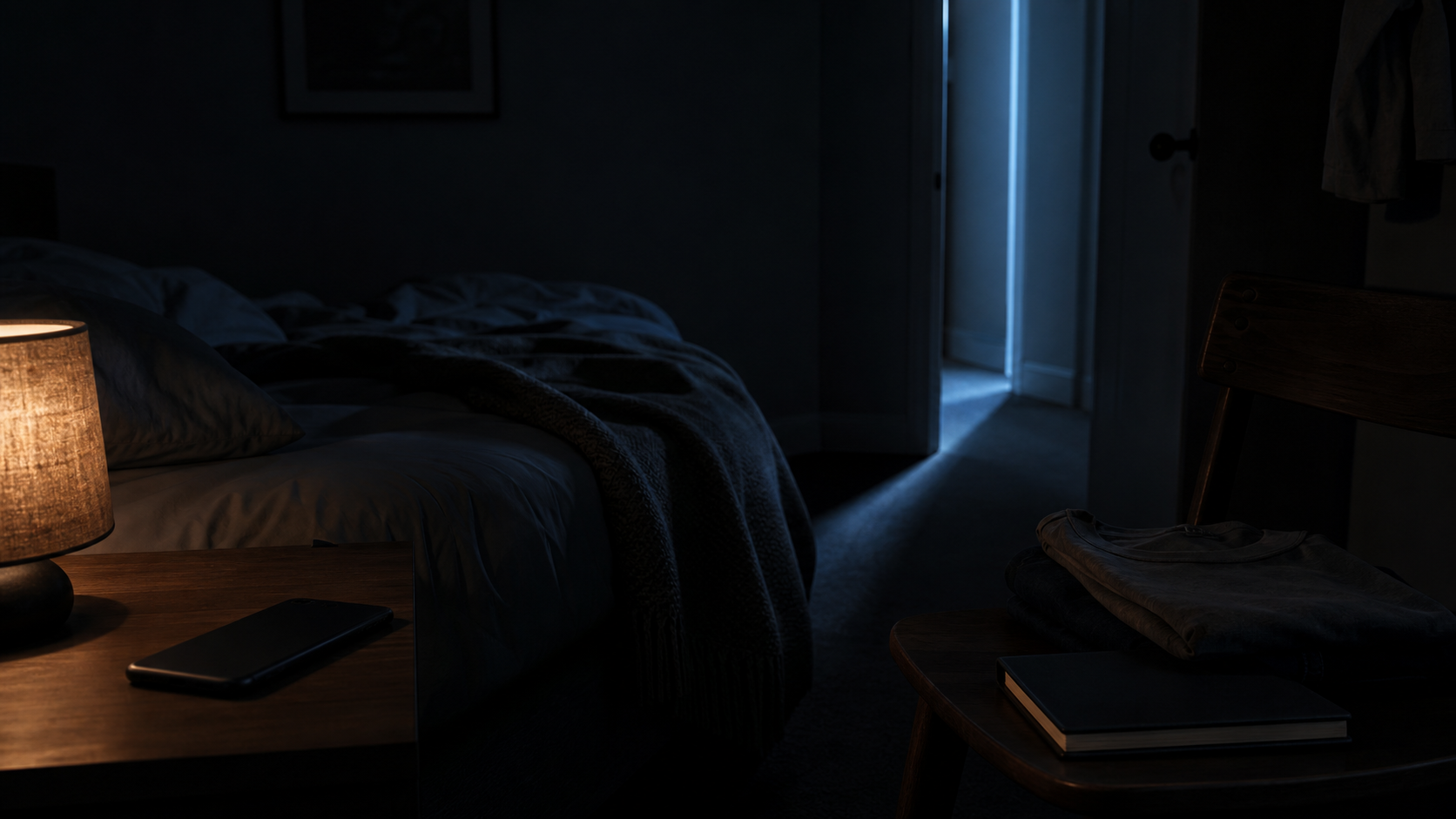
Reduce one obstacle at a time
Public-health guidance commonly supports a regular schedule, morning or daytime light, physical activity, and a cool, dark, quiet sleep environment. Test changes one at a time so you can see what helps. Individual needs and medical conditions vary.
Do not adjust treatment from a blog
Do not start, stop, or change prescription medication, supplements, or sleep aids based on this guide. Medication timing, sleep disorders, pain, breathing problems, mental health conditions, and shift work may require professional assessment.
Seek help for warning signs
- Falling asleep while driving or during safety-critical work.
- Loud snoring, gasping, or witnessed breathing pauses.
- Severe insomnia, rapidly changing sleep, or persistent daytime impairment.
- Sleep problems accompanied by crisis, mania-like symptoms, or thoughts of self-harm—use urgent local support.
Sources and further reading
Sources support the health and diagnostic context. Practical workflow suggestions are low-risk editorial adaptations, not clinical treatment.