

Errands are a switching problem as well as a distance problem
“How do I combine errands without making a route that is too exhausting or missing the one place with a real deadline?” The tempting answer is to put every nearby stop into one trip. That reduces travel on paper, but it can create a chain of parking, waiting, finding items, carrying, conversations, decisions, and time-window changes.
Adults with ADHD may experience difficulty with organization, planning, time management, remembering daily tasks, or trying to do several things at once. The same errand overload can also come from pain, fatigue, disability, caregiving, public-transport limits, unfamiliar places, sensory demands, variable opening hours, or a crowded household schedule. A difficult errand day is not evidence of ADHD by itself.
A workable batch passes three gates: the locations form a sensible route, the real time windows fit, and the total load is within the person's planned capacity. If one gate fails, splitting the trip is a design choice, not a failure.
Begin with the fixed anchor, not the longest list
A fixed anchor is the least movable part of the trip: an appointment, booked pickup, last collection time, limited service window, required companion, transit connection, or another commitment confirmed by the responsible organization. Put that anchor on the route first.
Next, separate a true deadline from a preferred finish date. A return that must be accepted today is different from a shop you would merely like to visit. Check the current address, hours, appointment rules, accessibility, collection instructions, and deadline on the destination's official website, notice, or direct contact route before leaving.
Do not copy private addresses, account details, medical information, or identity-document numbers into an exposed route plan. A generic stop name and a safe pointer to the official record are usually enough.
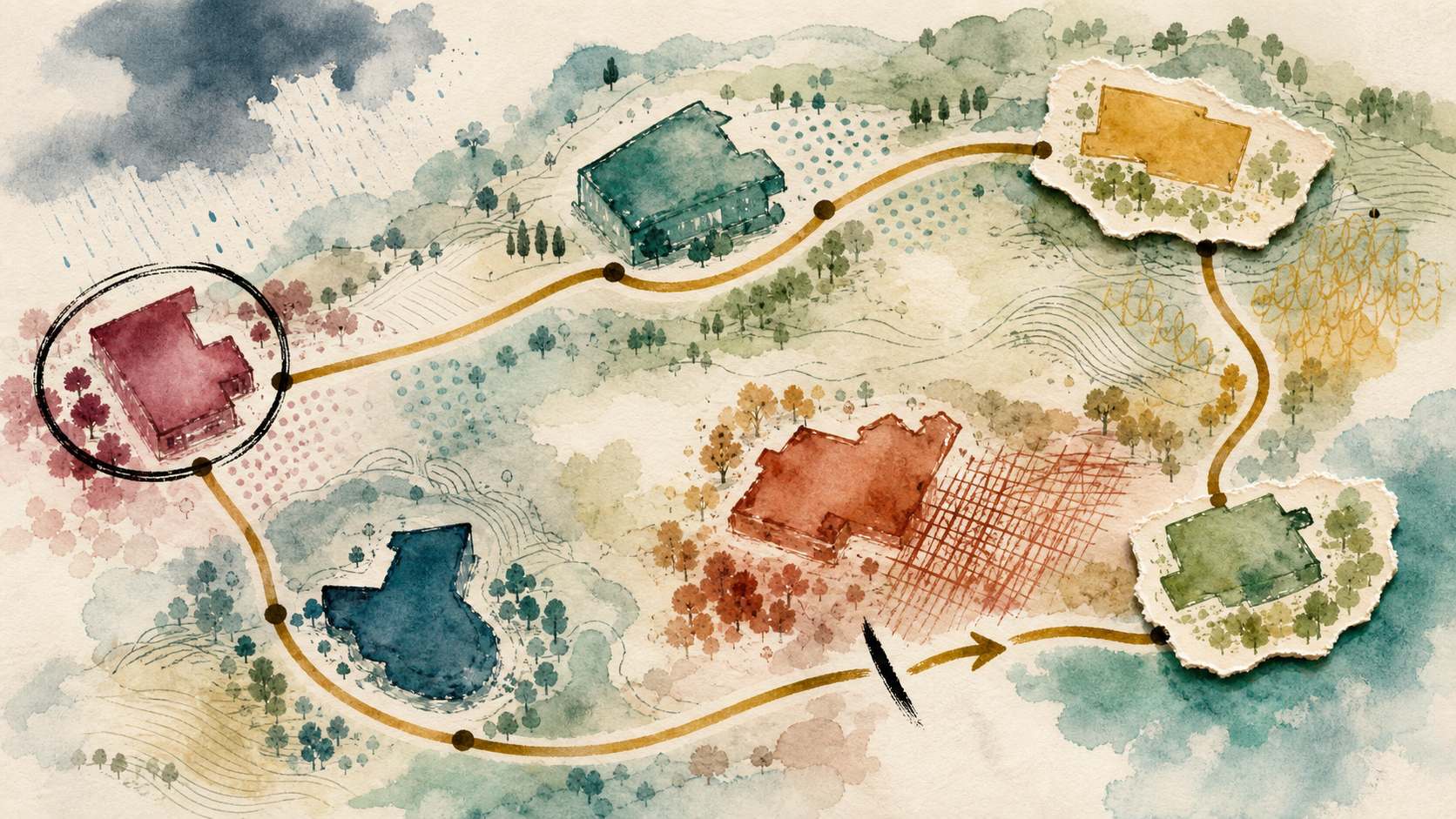
Give each possible stop one compact errand card
- Outcome: the observable result, such as collect parcel, return item, or ask one question.
- Official destination: the verified place or contact route, without unnecessary personal details.
- Real timing: fixed appointment, opening window, last acceptance time, or no confirmed deadline.
- Ready items: package, form, shopping list, payment method, mobility aid, or other permitted material needed to finish.
- Travel conditions: walking, driving, transit, parking, stairs, weather exposure, accessibility, and carrying limits that matter.
- Load type: waiting, conversation, decisions, noise, walking, lifting, or uncertainty. Label it low, medium, high, or unknown for this person and day.
- Done evidence: receipt, collected item, accepted return, confirmation, or a recorded next official step.
- Backup: what can be dropped, moved, delegated, delivered, or handled through an approved remote route.
The load label is a personal planning estimate, not a medical score and not a promise that the errand will feel a certain way. Unknown is more useful than pretending a new location is easy.
Use one decision order for the whole batch
- Move urgent safety, essential-needs, medical, legal, or other high-consequence matters to the appropriate official or qualified process; do not hide them inside routine batching.
- Place the fixed appointment or collection anchor first, including realistic arrival and check-in time.
- Protect the stop with the nearest verified deadline or closing window.
- Add only locations that create a simple route rather than repeated backtracking or uncertain transfers.
- Arrange compatible loads where possible; for example, do not assume several conversation-heavy or physically demanding stops belong together because they share a postcode.
- Place perishable, temperature-sensitive, fragile, heavy, or high-value items according to the instructions and conditions that apply to them.
- Name the first optional stop and the condition that will remove it from the trip.
This order prevents a low-value nearby stop from consuming the time or capacity reserved for the one result that actually has to happen.
Run the route, time, and energy test
- Route gate: is the stop genuinely on the path, with realistic parking, walking, transfer, and return travel included?
- Time gate: does it fit after travel, finding the entrance, queues, service time, delays, and the next fixed anchor?
- Energy gate: is its expected physical, sensory, social, and decision load compatible with the rest of the batch today?
Combine a stop only when all three gates are acceptable. This is deliberately not a points system: a closed office, unsafe journey, inaccessible entrance, or capacity limit cannot be cancelled out by a short distance. If information is missing, mark the stop provisional and verify it before it becomes load-bearing.
Set a cut point in advance, such as “after the pickup, go home unless both optional stops still fit” or “if the appointment ends after the protected departure time, remove the return.” A cut point turns adaptation into part of the plan.
Apply the test to five representative cases
- Fixed-time pickup plus nearby shop: protect check-in and collection first. Add the shop only if its total door-to-door time leaves the agreed buffer.
- Several places in one district: a compact map does not reveal queues, floors, parking, transfers, or closing times. Verify the route between entrances, not just the distance between pins.
- Conversation-heavy service counter: treat uncertainty, forms, decisions, and waiting as load. Pair it with a low-choice stop or make it the only major errand.
- Return deadline plus groceries: complete the accepted return first when its verified deadline is earlier; collect perishables late enough to follow safe storage guidance.
- Shared-household or transit trip: name who carries what, which schedule is authoritative, the accessible route, the meeting point, and who records completion. Do not rely on both people assuming the other has the ticket or document.
Stage the trip before crossing the door
- Verify each load-bearing destination through its official source and note when the check was made.
- Put the fixed anchor and protected departure time in the calendar; keep the stop order in one short route list.
- Place each stop's permitted materials together near the real exit path without exposing sensitive documents.
- Confirm transport, accessibility, weather, payment, carrying, refrigeration, charging, and companion needs that could change the route.
- Mark required stops, optional stops, and the cut point so the decision does not have to be rebuilt while tired.
- Choose the first visible action: put the return by the bag, open the official transit plan, or confirm the pickup window.
Do not keep the only copy of a critical document loose in a tote, and do not leave medicines, children, pets, food, valuables, or sensitive records in a vehicle contrary to the instructions and safety requirements that apply.
Keep route interaction separate from driving
The US National Highway Traffic Safety Administration says that shifting attention from driving is distraction and advises pulling over to a safe location and parking before reading or sending a message. Prepare the route before departure, silence avoidable notifications, and use a passenger for permitted route interaction when appropriate. Local traffic and device-use laws still apply.
NHTSA also warns that drowsy driving is preventable and that caffeine alone may not make a seriously sleep-deprived driver safe. Do not continue a batch because the list says the next stop is nearby. If driving is unsafe because of drowsiness, impairment, medicine effects, weather, distress, or another condition, stop the errand plan and use a safe alternative.
Walking, cycling, mobility-device, and transit routes have their own safety and accessibility conditions. Use current official local guidance and do not edit the route while moving through traffic or an unsafe environment.
Reset the route when one stop changes
- Get to a safe stationary place before reviewing the plan.
- Record the new fact: closed entrance, longer wait, missing item, changed transit, completed stop, or increased load.
- Protect the next fixed anchor and any true deadline that still applies.
- Remove optional stops from the end of the route until the remaining plan fits again.
- Create one next action for each removed stop instead of leaving it as a vague failure, such as verify new hours or schedule delivery.
Do not race, skip a necessary break, or interact with a device while driving to preserve the original batch. Once a load-bearing fact changes, the original route is only a draft.
Repair the point where the plan keeps failing
- You repeatedly arrive when a service is unavailable: make official verification a pre-departure requirement, while recognizing that same-day changes can still occur.
- The route always grows: cap the batch at one fixed anchor plus one or two compatible stops until actual timing is known.
- Materials are missing: create a stop-specific staging container or checklist at the arrival point for those materials.
- The first errand consumes the day: classify its load as unknown or high next time and preserve a longer recovery margin.
- Optional stops never happen: decide whether they need a separate appointment, delivery, delegation, approved remote channel, or removal from the list.
- A shared trip creates confusion: assign owner, materials, transport, completion evidence, and the person authorized to change the plan.
Start with two compatible errands
Choose one low-risk required errand and one genuinely optional stop. Verify the destination and timing, label the expected load, and write one cut condition. If the optional stop fails any gate before or during the trip, remove it and leave a next action for later.
If the trip involves urgent care, safety, a legal deadline, essential medication, an inaccessible route, severe fatigue, or another high-consequence condition, skip this batching exercise and use the relevant official, emergency, accessibility, transport, or qualified support route.
Thank you for testing a route that is allowed to get shorter. Today, make one compact errand card and confirm one fixed anchor through its official source. One verified stop is enough to begin.
Sources and further reading
Sources support the health and diagnostic context. Practical workflow suggestions are low-risk editorial adaptations, not clinical treatment.
- NIMH: ADHD in Adults—4 Things to Know (checked July 13, 2026)
- NICE guideline NG87: ADHD diagnosis, management, and environmental modifications (checked July 13, 2026)
- US NHTSA: Distracted Driving—Put the Phone Away or Pay (checked July 13, 2026)
- US NHTSA: Drowsy Driving—Avoid Falling Asleep Behind the Wheel (checked July 13, 2026)