

A handoff is more than a summary
A summary can explain what happened and still leave the receiver unable to act. They may know that a draft exists without knowing which file is current, what was verified, what remains uncertain, who can approve the next step, or when a delay becomes consequential.
Adults with ADHD may experience difficulties with organization, planning, working memory, time management, or completing large projects. Similar handoff failures can also result from scattered systems, unclear roles, interrupted work, missing access, workload, or an organization that has never defined what a complete transfer includes. A poor handoff is not evidence of ADHD by itself.
The practical goal is continuity: the receiver should be able to locate the current state, understand its limits, identify the next safe action, and know who holds responsibility.
Use five fields in the same order
- State: the last verified condition of the work and what has actually changed.
- Location: the authorized source of truth for the current file, ticket, record, data, or materials.
- Next: the next observable action that can be started without rebuilding the plan.
- Blocked: the decision, access, dependency, risk, or information preventing safe movement.
- Owner: the person or role responsible now, plus who can decide or approve when that differs.
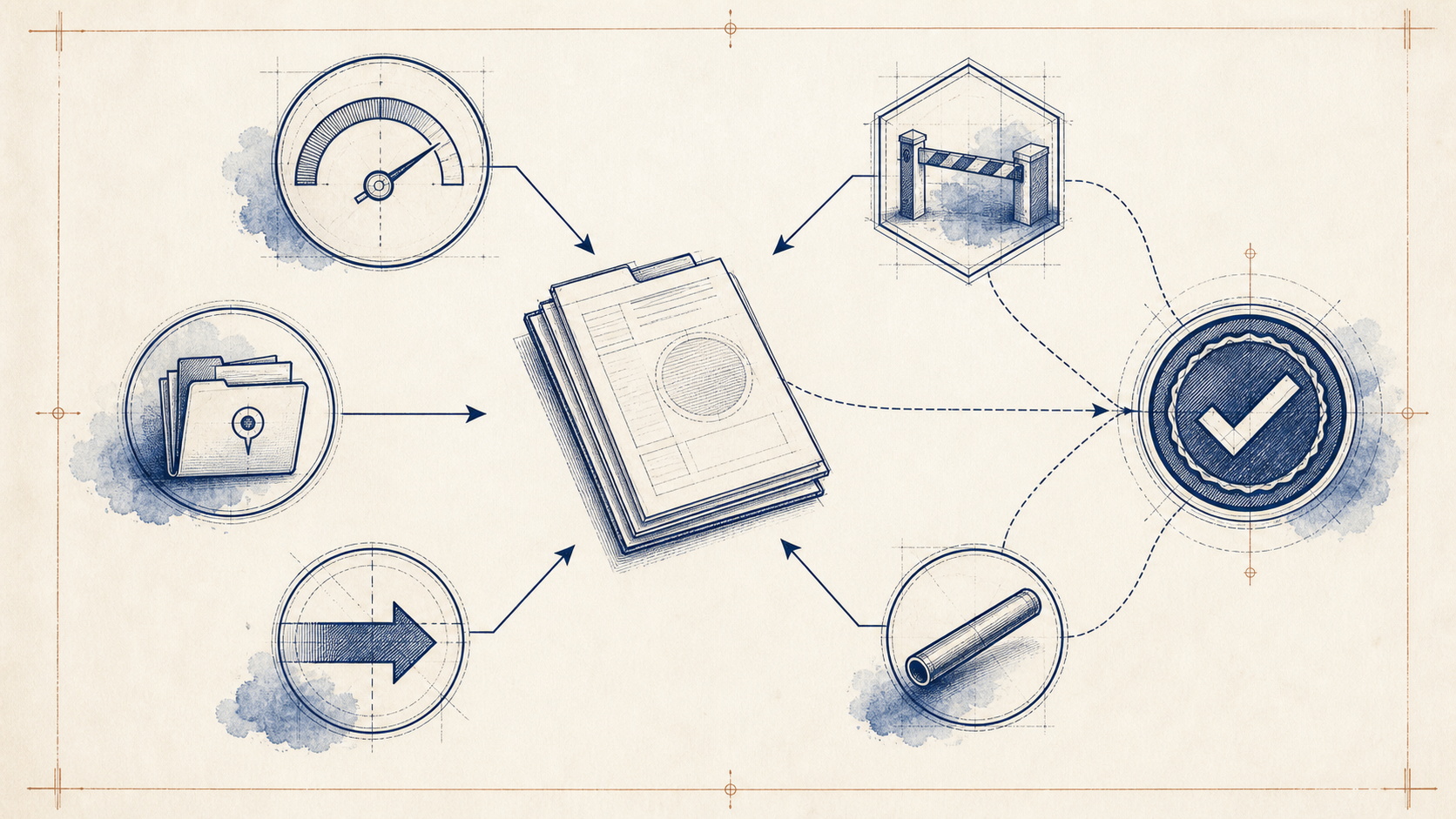
Add dates, risks, contacts, and background when the work requires them. The five fields are a minimum routing frame for ordinary work, not a replacement for a formal operational, legal, clinical, safety, security, or regulatory handover procedure.
State means last verified state—not a progress feeling
“Mostly done” asks the receiver to discover what mostly means. Record the artifact and verification boundary: “Draft sections 1–3 match the approved source table; section 4 still contains placeholder figures.” Separate completed, reviewed, assumed, and untested work.
If a condition has changed since the work was checked, say when it was last verified. Do not mark something complete because a message was sent if the real requirement is approval, receipt, publication, payment, or another confirmed outcome.
Location should point to one source of truth
- Link to the exact project, ticket, folder, document, record, or physical location allowed by the organization.
- Name the current version or status without creating an unofficial duplicate.
- State required access and the approved route for obtaining it.
- Link supporting evidence rather than copying sensitive material into an extra note.
- Identify temporary local work that has not yet reached the shared system.
Do not move confidential material to a personal account, public link, or unapproved AI service to make the handoff convenient. If the receiver cannot access the source of truth, access is a blocker—not a reason to create a shadow copy.
Next should open the doorway
A useful next action begins with an observable verb and a specific object: “compare the three flagged totals with the approved ledger” is more resumable than “finish finance.” Include the stopping condition or expected output when it is not obvious.
Do not silently assign work to the receiver. Confirm that the person or role has accepted the handoff and has the authority, capacity, information, and time required. If ownership is still undecided, record that explicitly.
Blocked should name what changes the state
- Decision: what choice is required and who can make it.
- Access: which system, file, site, or permission is missing.
- Dependency: what upstream output must arrive and from whom.
- Risk or uncertainty: what has not been verified and what must not be assumed.
- Timing: when the blocker begins to affect the promised check or due date.
“Waiting on Alex” is incomplete if the receiver cannot tell what Alex is providing or what happens after it arrives. Record the expected input, agreed channel, next check, and applicable escalation path.
Owner should distinguish work, decision, and review
One person may perform the next action while another approves scope and a third reviews the result. Name those roles when the distinction affects movement. Avoid listing an entire team as owner unless the organization has a clear mechanism for assigning the next action within that team.
Temporary coverage should say when responsibility begins and ends, what emergencies or decisions are included, and how the original owner re-enters the work. A handoff does not automatically transfer formal accountability where policy or law assigns it differently.
Ask the receiver to cross-check
- The receiver opens the stated source of truth rather than confirming from the handoff note alone.
- They restate the current condition and the first action in their own words.
- They identify any missing access, unclear assumption, date conflict, or unsafe state.
- Both sides confirm the owner and the point at which responsibility changes.
- Corrections are made in the authorized record, not left only in a private message.
UK Health and Safety Executive guidance for shift handovers emphasizes preparation, two-way exchange, and cross-checking by incoming personnel. That guidance is designed for safety-critical work, where a five-field blog template is not sufficient, but the principle is useful: sending information is not the same as establishing shared understanding.
A compact handoff example
- State: draft table reconciled to the approved source through June; two July entries remain unverified.
- Location: current workbook and evidence links are in the authorized project folder; access group is Finance Reviewers.
- Next: compare the two flagged entries with the signed July statements and record the result in the review column.
- Blocked: one statement is missing; procurement is expected to provide it Tuesday, and the Wednesday review moves if it does not arrive.
- Owner: Sam performs the comparison; Lee approves any change to the reporting date; Morgan reviews the final table.
This example is fictional and illustrates structure only. Real financial work must follow the organization's authorization, evidence, review, retention, privacy, and escalation controls.
Match the handoff to consequence
For a low-risk internal draft, a written card and an acknowledged message may be enough. For unfamiliar, abnormal, time-critical, or high-consequence work, the handoff may require overlap time, verbal and written exchange, demonstrations, formal checklists, read-back, signatures, or supervisor approval.
Clinical handoff studies have found improvements in communication after structured handoff programs, but those findings apply to specific healthcare settings and should not be generalized into a universal five-field rule. Use the trained procedure for the domain and treat this article only as a prompt for ordinary, low-risk knowledge work.
Test the handoff before you leave
Imagine the receiver opens the handoff after a weekend with no access to your memory or recent messages. Can they find the current artifact, distinguish verified from unverified work, begin one safe action, name the blocker, and identify the owner? Repair the first answer that is no.
If handoffs, organization, and context switching repeatedly cause meaningful impairment across important areas, consider discussing the concrete pattern with a qualified professional. Bring examples of missing state, scattered locations, ambiguous ownership, failed reminders, and the work systems already tried.
Sources and further reading
Sources support the health and diagnostic context. Practical workflow suggestions are low-risk editorial adaptations, not clinical treatment.